From Rancho to Community Treasure: The Story of Hacienda de las Flores
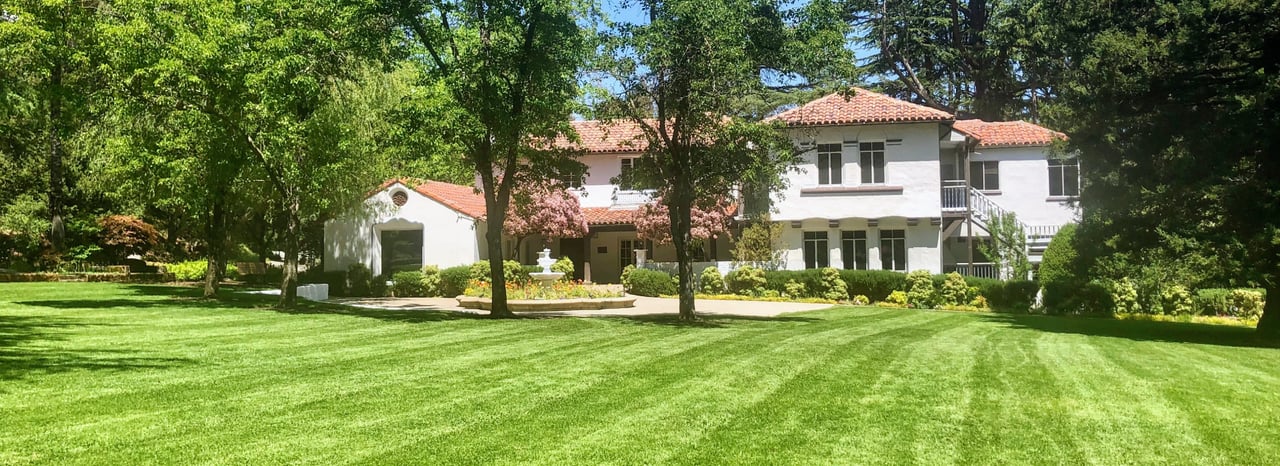
Hacienda de las Flores has been a Mexican rancho, a planned children's home, an oil heir's horse estate and a religious retreat before becoming the town's own gathering place. Today most Moragans know it for summer camps, classes, weddings and concerts on the lawn at 2100 Donald Drive. But the Spanish-style house and its gardens carry more than a century of stories, and most of them start long before Moraga was a town.
Rancho Roots: (1841-1857)
The Hacienda's land was once part of Rancho Laguna de los Palos Colorados, a 13,316-acre Mexican land grant awarded in 1841 to Joaquín Moraga and his cousin, Juan Bernal. The grant covered what is now Moraga and parts of Orinda and Lafayette.
In 1857, a settler named Jesse Williams bought Lot No. 1, a 160-acre quarter section of the rancho, from José de Jesús Moraga. The Moraga Historical Society's marker describes Williams as a squatter who farmed the land before buying it. His purchase is the first recorded chapter in the property's American history.
A Home for Children: (1916)
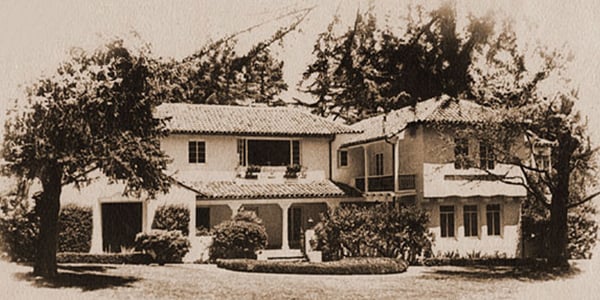
The house itself began with a charitable idea. Manuel Lucas bought the land in 1906, and about ten years later he sold 20 acres to Alberta Higgins and Gertrude Malette. The two women built the first story of today's Hacienda as a planned residence for homeless children, with Gertrude credited as its primary designer.
That makes 2016 the building's centennial, which the town marked with a celebration on the grounds. One older newspaper account dates the house to 1929 under Donald Rheem instead; this article follows the Moraga Historical Society's marker, which credits Higgins and Malette with the original structure.
The Rheem Era: the San Simeon of the East Bay, (1934-1961)
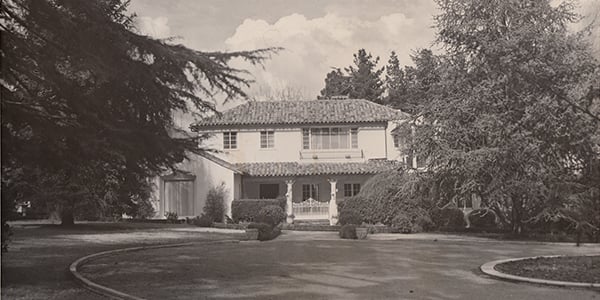
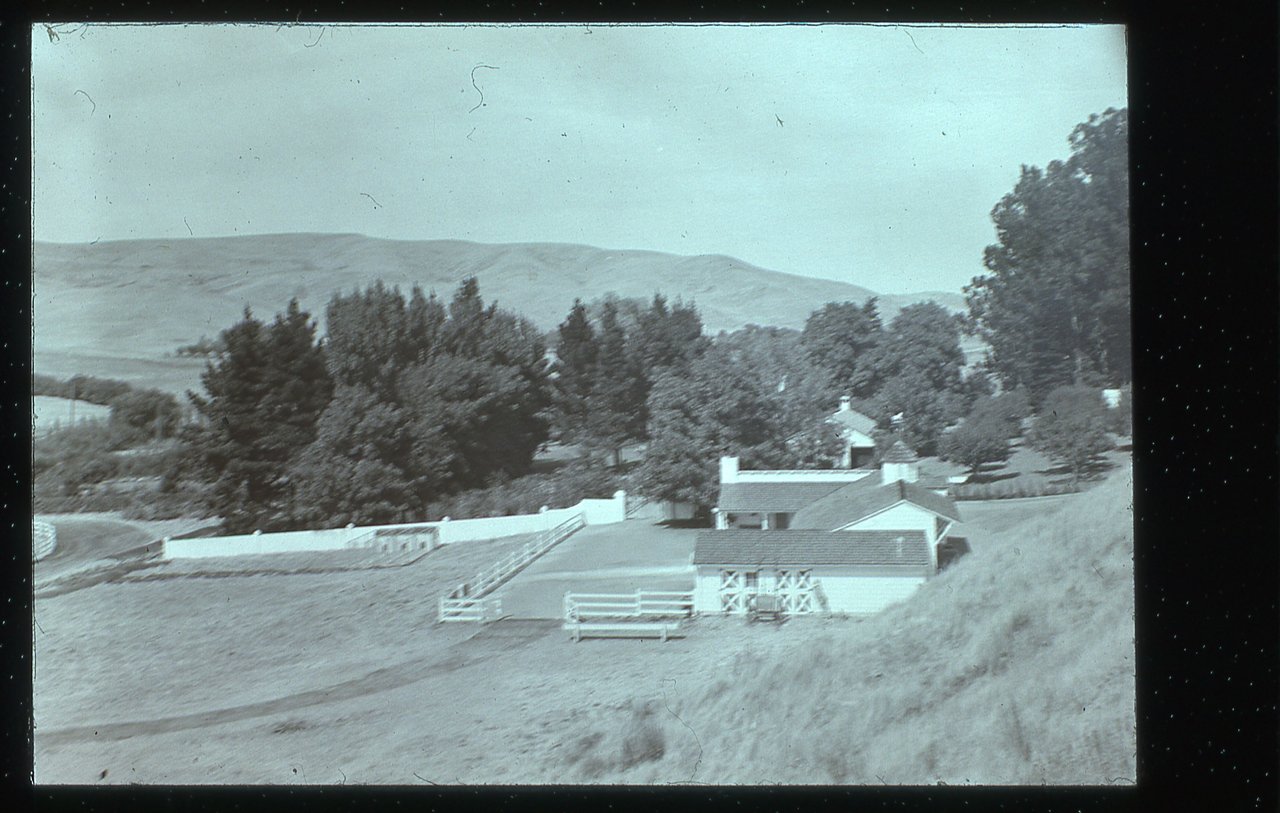
In 1934, industrialist Donald Rheem bought the property for his wife, Alice. She loved the hills around Moraga and wanted room for her horses. Rheem, whose father was president of Standard Oil Company of California, enlarged the house and added stables and a racetrack.
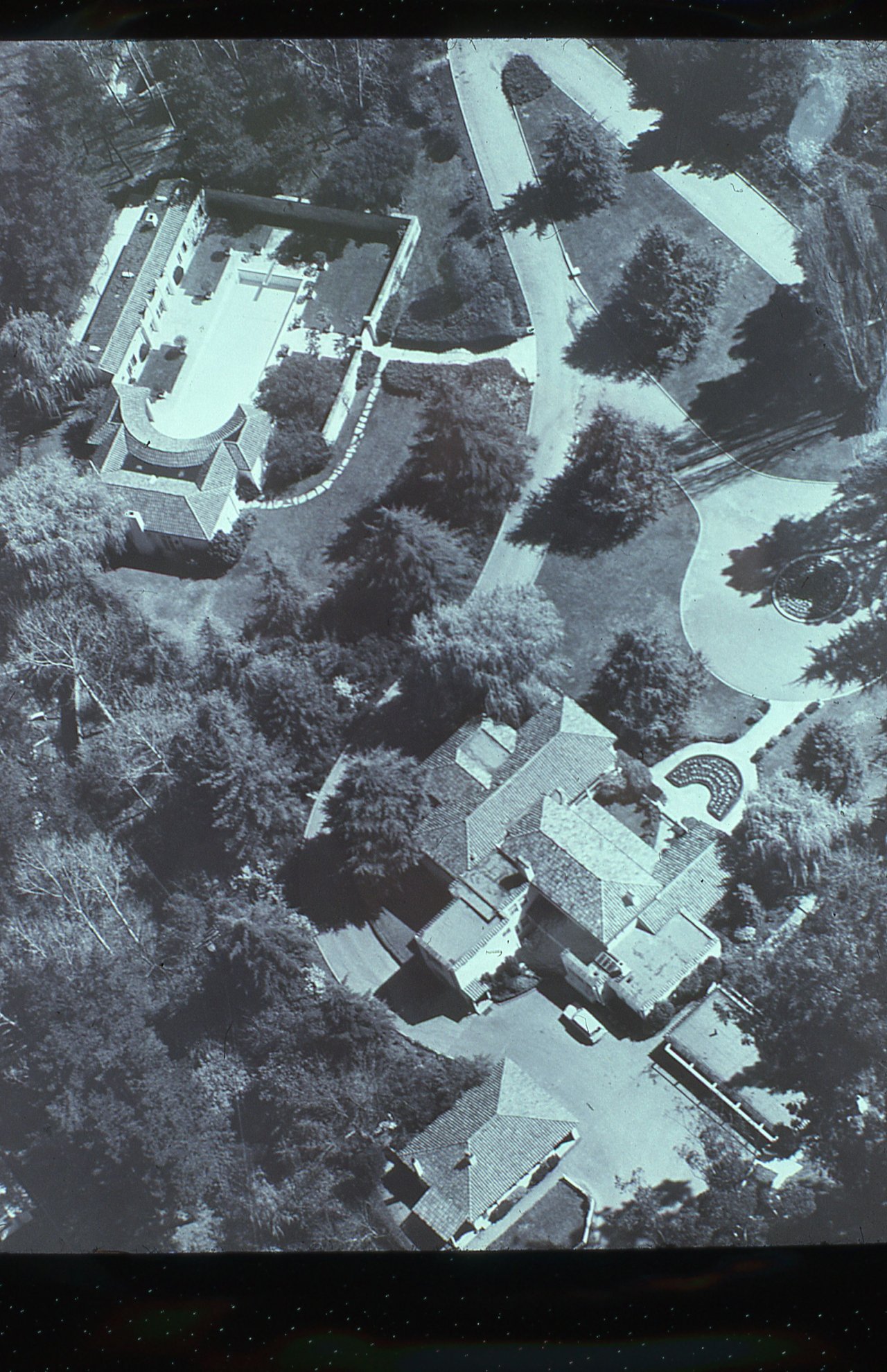
In 1938 came a swimming pool and cabana. That art deco pool house is today's Pavilion, and the lawn in front of it was once the pool. The estate also had quarters for a chauffeur, maid and butler, plus a theater and a darkroom.
Rheem was a friend of William Randolph Hearst. His estate was no Hearst Castle, but locals took to calling it the San Simeon of the East Bay.
Rheem had even bigger plans. On the hillside above today's Devin Drive, he began building a three-story stone house nicknamed the castle, the chalet or the rock house. World War II and material shortages halted construction after he had spent $30,000 to $40,000, and only its foundation remained.
The Rheems also opened the grounds for community causes. A Historical Society member recalls modeling in a fundraising fashion show around the pool in the early 1960s, with Rheem's permission. After Alice died, Rheem decided to sell the estate he had built for her.
The Christian Brothers: (1961-1973)
In 1961, the Christian Brothers bought the property and used it as a residence and administrative center. For about a dozen years the former party estate became a quieter, more private place.
Becoming Moraga's Hacienda: (1973 to today)
In 1973, the Moraga Park and Recreation Authority bought the estate for $343,750. The sale included archives with a photo history of the land and building going back to 1857. The Town of Moraga took ownership in 1977, and the name Hacienda de las Flores was official by 1979.
The 1970s and 1980s were the Hacienda's heyday as a recreation center. It hosted Diablo Valley College classes, a youth summer theater, the Moraga Music Makers and holiday workshops.
Residents later formed the Hacienda Foundation, a nonprofit dedicated to preserving the building as a community center. In 2013, the foundation and the town partnered to renovate the Pavilion with new restrooms, accessibility upgrades and drainage fixes so it could be rented for weddings. In 2016, the two groups threw a centennial celebration, complete with a pop-up museum of the Hacienda's history in its mosaic room.
Visit a Piece of Moraga History
Next time you're at the Hacienda for a class, concert or wedding, take a few minutes to look around. The Historical Society's marker stands near the entrance, and framed historic photos with explanatory plaques line the main corridor. Stand on the Pavilion lawn and picture the Rheems' pool, or look up at the hills that drew Alice Rheem here with her horses.
To dig deeper, visit the Moraga Historical Society, which holds many of the Hacienda's archives.
Sources
Historical Society Tells Hacienda's Story with Pictures, Lamorinda Weekly, 2011
Moraga Historical Society Celebrates 60 Years of Preservation, Lamorinda Weekly
** Content and images courtesy of the Moraga Historic Society